Buying security cameras wholesale looks simple from the outside: find a factory, ask for a price list, order a carton. Anyone who has actually placed a first container order knows the real work sits elsewhere — in supplier verification, certification scope, sample testing, MOQ negotiation, and the question nobody asks early enough: what happens on the second order?
This guide walks through that work in the order a real buyer meets it. It is written for distributors, marketplace sellers, retail chains and brands buying wholesale security cameras for resale — not for end users buying three cameras for a house. If that is you, our AI Security Camera vs Traditional Security Camera explainer is the better starting point.
What "wholesale" actually means in this category
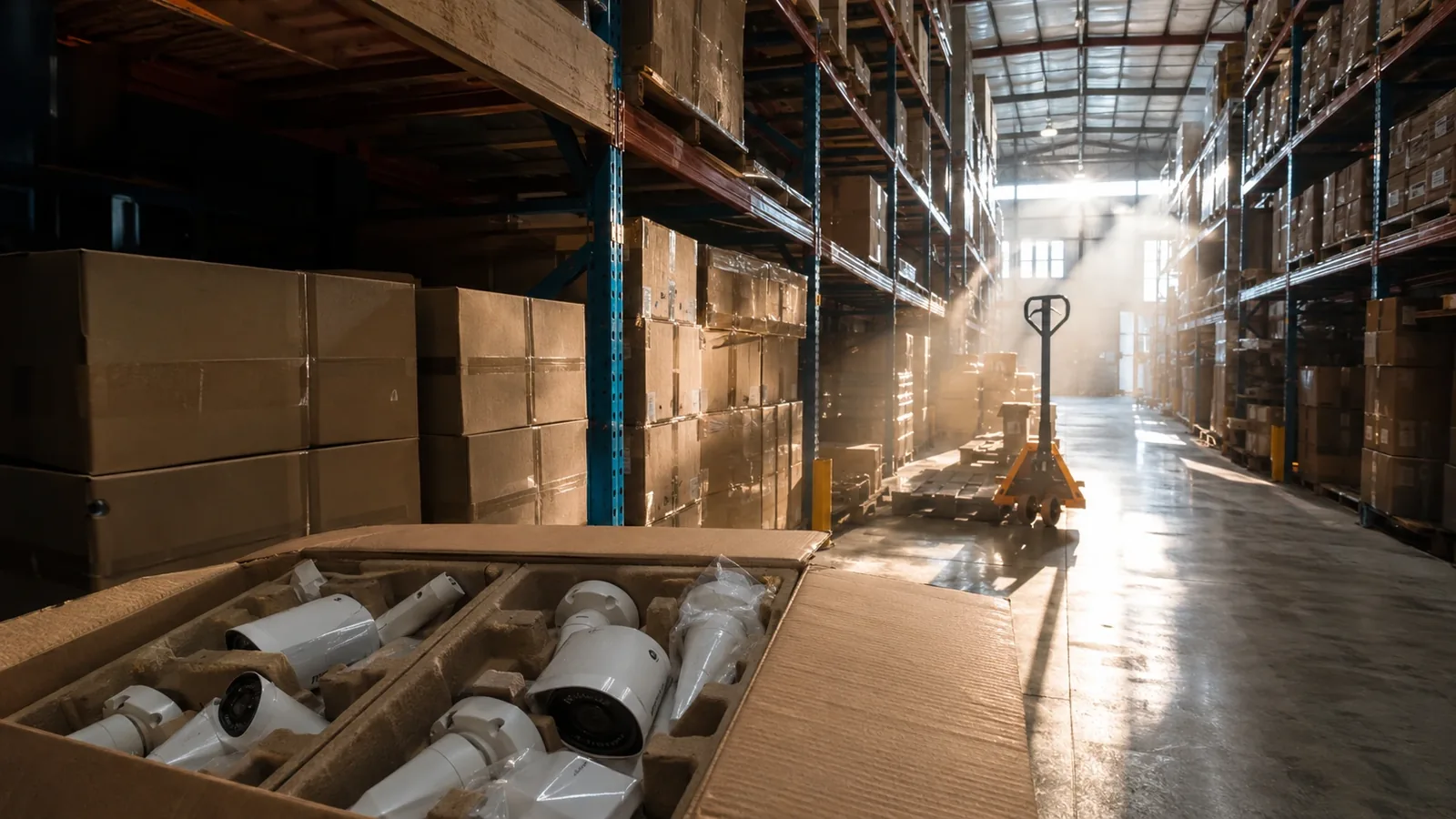
In this trade, "wholesale security cameras" covers three different purchase structures, and mixing them up is the most common first-order mistake:
| Structure | What you get | Typical MOQ | Who it fits |
|---|---|---|---|
| Stock wholesale | Factory-brand or neutral cameras, existing packaging, fast lead time | From ~100 pcs | Distributors testing a category, marketplace sellers |
| OEM-branded | Your logo on hardware, color box, manual and voice prompts | ~2,000 pcs | Established brands and large sellers |
| White-label platform | Hardware plus app, cloud and subscriptions under your brand | ~500 pcs | Sellers building a long-term brand |
The numbers above are FAELAN’s published tiers — other factories differ, but the three-tier structure is close to universal. The practical takeaway: decide which structure you are buying before you compare prices, because a stock-wholesale quote and an OEM quote are not the same product, and the cheaper one is not automatically the better deal.
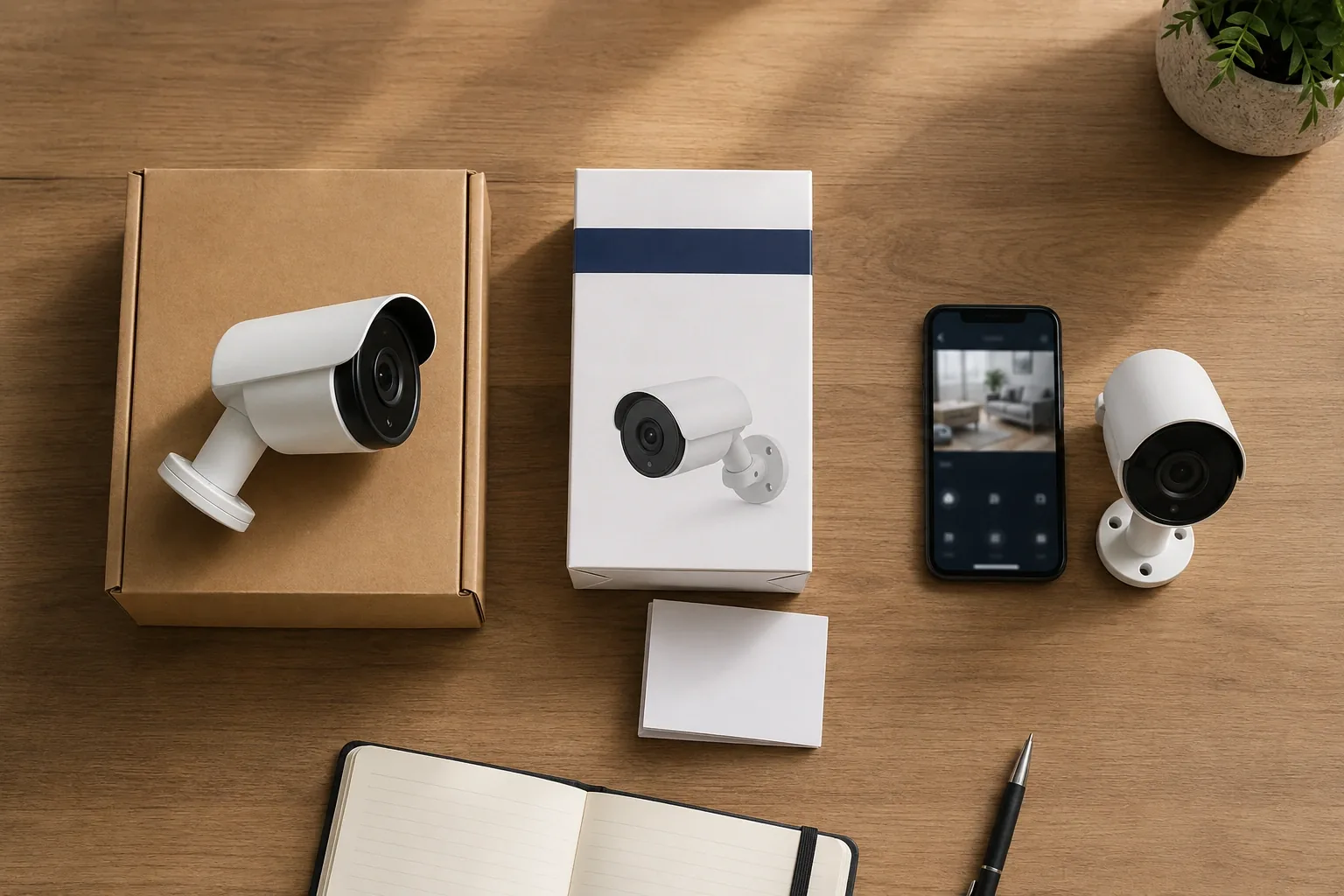
The deeper version of this decision — when to stay on shared public-mold hardware and when to invest in your own — is covered in Public Mold vs Private Mold AI Cameras.
Five wholesale buyer profiles, five different priorities
Most sourcing advice pretends every buyer wants the same thing. They do not. Find your row first; it changes how you should read the rest of this guide.
- Regional distributor. You sell to dealers and shops. Your priority is a lineup that looks complete on a shelf — indoor, outdoor, solar — plus certification for your market and a supplier who answers the phone after the container ships. Lineup breadth beats unit price.
- Marketplace seller (Mercado Libre, Amazon, Shopee). You live on listing conversion and return rate. Your priority is stock SKUs with strong product visuals, fast restock, and a defect rate low enough that reviews stay above 4 stars. Listing-ready marketing assets are worth real money to you.
- Retail chain or buying group. You need consistent packaging, barcode and compliance discipline, and predictable replenishment. A supplier that holds branded packaging in inventory between orders saves you from re-tooling every cycle.
- Private-label or OEM brand. You are building equity, not flipping cartons. App branding, cloud account ownership, firmware update policy and exit terms matter more than the third decimal on the unit price.
- Project buyer. You supply cameras in volume for housing developments or small-business rollouts. Confirm connectivity fits the sites — for WiFi camera lines like ours, that means router or WiFi-bridge coverage, an RJ45 wired-backup port for weak-signal spots, and local microSD recording where the network is unreliable.
Where to buy wholesale security cameras: three channels compared
Before evaluating any single supplier, decide which channel you are buying through, because each one trades convenience against control differently.
B2B marketplaces (Alibaba, Made-in-China, Global Sources). The widest catalog of wholesale security cameras and the fastest way to collect quotes — and also the channel where trading companies most often present as factories. Treat marketplace listings as a directory, not a verdict: every claim still needs the verification steps below. Escrow-style payment protection helps on a first order; it does nothing for certification gaps or batch-two quality drift.
Trade shows (CES, IFA, Canton Fair, CPSE Shenzhen). The fastest way to compare twenty suppliers’ build quality with your own hands in one afternoon, and to read which companies invest in their product line versus their booth. The limitation is timing — shows happen twice a year; your restock does not.
Direct factory relationships. Slowest to establish, strongest to own. Buying wholesale security cameras directly from the manufacturer removes a margin layer, but the real gains are operational: engineering answers without a middleman, packaging held between orders, firmware fixes that actually reach your batch. Most serious distributors use marketplaces and shows to find candidates, then move the relationship direct.
Whichever channel starts the conversation, the evaluation work is identical — which is the next section.
Seven criteria for evaluating a wholesale supplier
These are the checks that separate a supplier you can build on from a price list with a logo.
1. Factory or trading company?
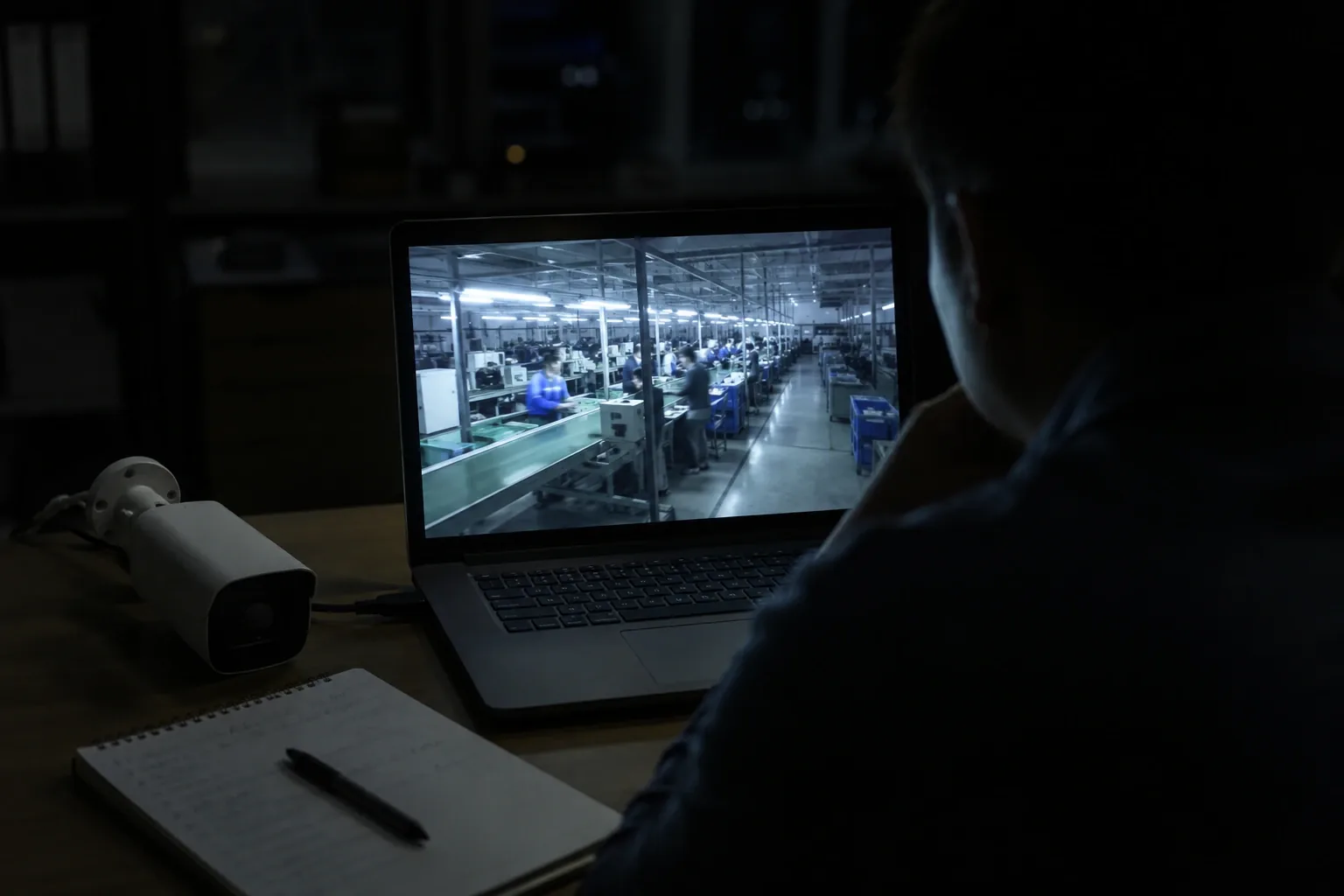
Both can be legitimate, but you should know which one you are talking to, because it decides who controls quality, lead time and after-sales. Ask for the factory name and address, an ISO 9001 certificate that matches that name, and production-floor photos or a live video walk-through. A factory answers these in one email. A trader forwards your question and the answer comes back three days later, slightly wrong.
FAELAN builds on a 20-year camera manufacturing base — an 8,000 m² facility covering SMT component production through assembly, testing and warehousing. That is also the standard you should hold any supplier to: if they cannot show you the line, assume they do not own it.
2. Certification scope — per SKU and per market
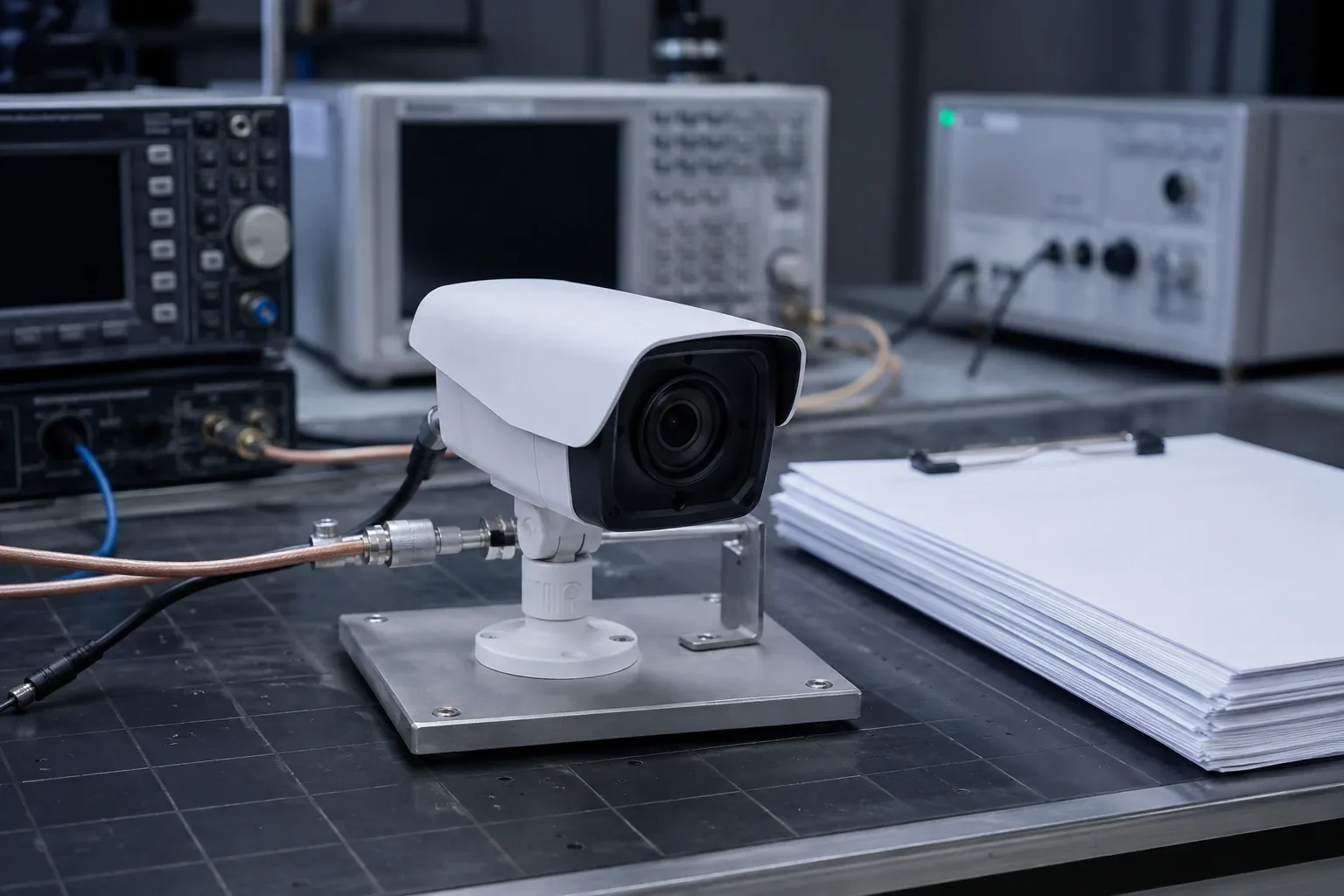
"CE certified" on a quotation means very little until you confirm which SKU and which market. Radio certification depends on the wireless module and power configuration, so one certified model in a lineup does not certify its siblings.
What to confirm for the common markets:
- United States: FCC equipment authorization (verifiable in the FCC equipment authorization database)
- European Union: CE (RED directive for radio equipment) plus RoHS
- Mexico: IFT homologation
- Brazil: Anatel certification (searchable on the Anatel certified products portal)
- Argentina: ENACOM approval
- Japan: TELEC
FAELAN holds FCC, CE, RoHS, ISO 9001:2015 and TELEC, and supports the certification requirements for IFT, Anatel and ENACOM — and the operative habit to copy is the phrase "per SKU, per market": ask your supplier to put the certification scope of your exact models in writing before you commit.
3. Sample policy and what to test when the box arrives
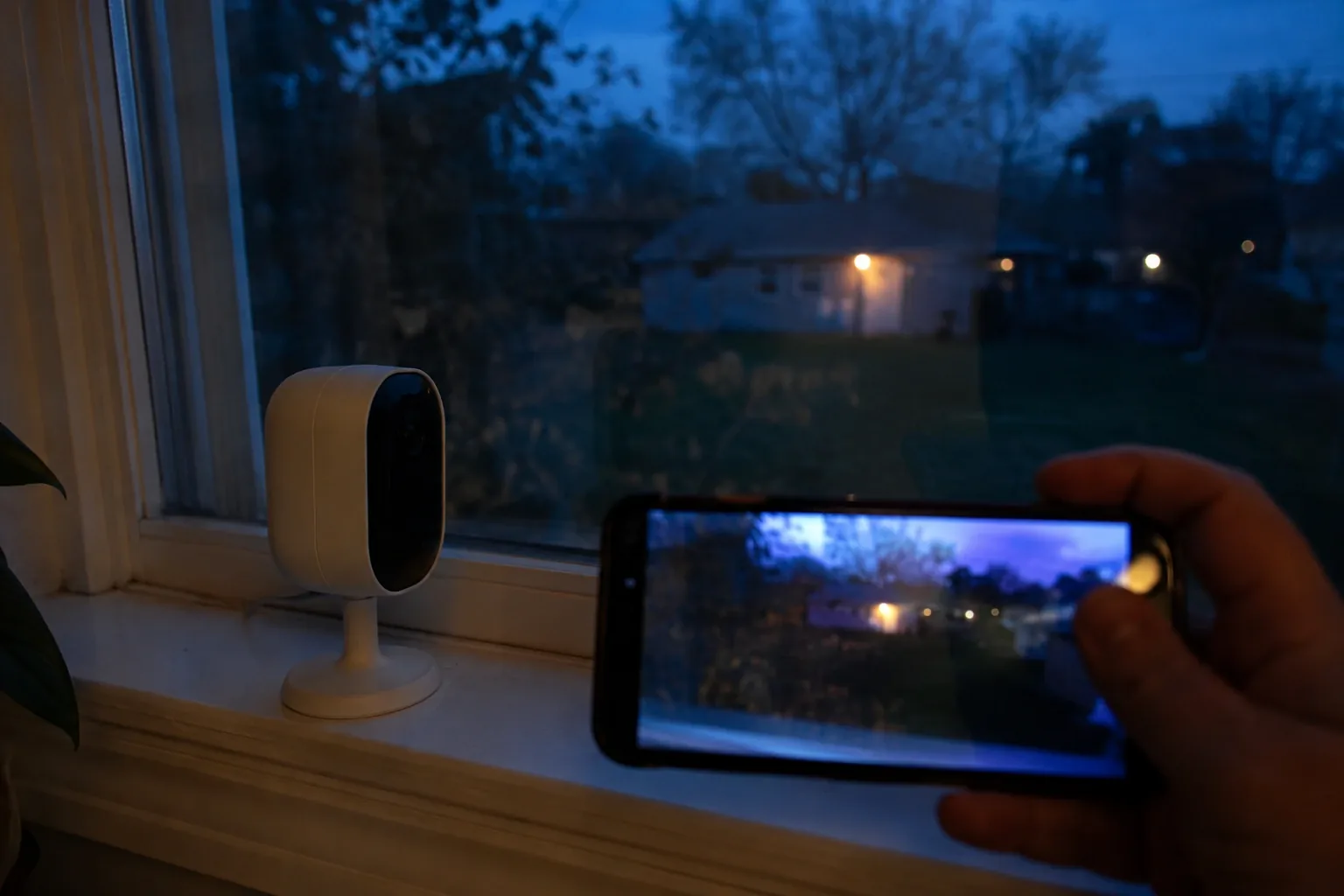
A supplier confident in their hardware ships samples fast — stock samples in 3–7 days from Shenzhen is a normal benchmark. When the sample arrives, test it like a hostile customer, not like a hopeful buyer:
- Setup time: unbox to first live view, on a normal home router. Over ten minutes means returns.
- WiFi behavior at distance: test at the far end of a building, then plug the RJ45 port (if the model has one) and compare. Wired backup is what saves weak-signal installs.
- Night vision honestly: point it at a dark yard, not a dim room.
- Alert quality: walk past it fifty times. Count false alerts from shadows, headlights, pets. This is where AI detection either earns its name or doesn’t — the difference is explained in our AI vs traditional camera comparison.
- App experience in your market’s language: your buyers will judge the app harder than the housing.
- Local storage: pull the network cable and confirm the camera keeps recording to microSD.
4. MOQ flexibility on the first order
The standard factory MOQ exists to protect production economics, but a supplier worth keeping knows the first order from a new buyer is a trust exercise, not a margin event. The pattern to look for: a negotiated working MOQ on the first run, with branded packaging printed in the full batch and the surplus held for your reorder. We documented exactly this arrangement in a real engagement — see how a LATAM distributor built an own-brand camera lineup.
If a supplier’s only answer to "can we start smaller" is a higher unit price, you have learned something useful about order two.
5. Lineup breadth — can one supplier cover your shelf?
Downstream buyers rarely accept a one-SKU "test". A credible retail or distribution lineup needs indoor, outdoor and solar coverage across at least entry and mid price points. Consolidating that lineup with one factory cuts your QC overhead, your freight consolidation cost and your certification paperwork — versus stitching three suppliers together and tripling all of it.
This is the structure behind FAELAN’s nine-model range: Lite (2MP), Standard (3MP) and Pro (4–6MP) series, each available in indoor, outdoor and solar variants. For sites with no power at all, the solar AI camera lineup is its own buyer’s guide topic.
6. The software stack behind the hardware
Cameras are no longer a hardware-only purchase. Ask what runs on-device and what runs in the cloud, and who owns the buyer relationship inside the app. The structure to look for: on-device AI detection (person, vehicle, zone events — works without a subscription) plus an optional cloud AI layer that the brand can sell as a subscription. FAELAN’s version of that cloud layer is a generative-AI care agent — natural-language event descriptions, daily summaries, ask-anything video search — running on a white-label app and cloud platform that can carry your brand instead of ours.
For wholesale buyers this is a margin question, not a tech question: hardware margins are made once; subscription margins repeat.
7. Reorder behavior — the only review that matters
Anyone can ship a good first container. The supplier test is the second order: Did defect feedback from batch one change anything in batch two? Is your account manager still the same person? Did the price hold? Ask any supplier for a reference customer who has reordered at least twice. The silence after that question is data.
Pricing: why the cheapest unit usually loses

Price comparison on wholesale security cameras fails when it stops at the unit price. The number that decides your margin is closer to:
Landed cost per sellable unit = unit price + freight + duty + certification amortization + defect/return cost + the support hours your team burns per hundred units sold.
A camera that costs 8% more but cuts your return rate and support load routinely wins on that math. This is also why B2B pricing in this category is quoted per configuration rather than published as a list — volume, packaging, certification scope and software options all move the number. (FAELAN quotes on request for exactly that reason; MOQ, sample and warranty terms are published on our ordering and terms page.)
A 12-month hardware warranty with lifetime firmware updates is a reasonable baseline to demand. Shorter than that, price in the risk.
From wholesale buyer to brand owner: the upgrade path
The most successful wholesale relationships in this category follow the same arc: a cautious stock order, a clean sell-through, an OEM-branded second cycle, then a white-label app and cloud under the buyer’s own name. None of those steps requires betting the company — that is the point of staged MOQ tiers.
If you are at the start of that arc, two resources map the rest of it: the OEM / ODM solutions page covers branding, packaging and certification mechanics, and the public mold vs private mold guide covers when each step makes commercial sense.
Red flags: walk away when you see these
- A "factory" that cannot name its own address or show its line on video
- Certificates that do not match the company name, the SKU, or both
- A price quoted before anyone asked about your market, volume or certification needs
- No written warranty terms, or "warranty" that means freight-at-your-cost replacement
- Samples that take three weeks — production will be slower
- Every question answered with a discount
The buyer’s checklist (print this)
- Decide your structure: stock wholesale, OEM-branded, or white-label platform
- Verify the factory: name, address, ISO 9001, live line video
- Certification scope in writing — per SKU, per market
- Order samples; test setup time, WiFi-plus-wired-backup behavior, night vision, false-alert rate, app language, microSD recording
- Negotiate a working first-run MOQ with packaging held for reorder
- Confirm lineup breadth: indoor + outdoor + solar from one source
- Ask what is on-device and what is subscription, and whose brand the app carries
- Get a reference customer who has reordered twice
- Compare landed cost per sellable unit, not unit price
- Put warranty and firmware-update policy in the contract
Frequently asked questions
What is the typical MOQ for wholesale security cameras?
Stock orders commonly start around 100 pieces; OEM-branded orders (your logo on hardware and packaging) typically start near 2,000 pieces; white-label platform programs sit between, around 500 pieces. First-run MOQs are often negotiable with factories that want a long-term account — ask.
How do I know if a supplier is a real factory and not a trading company?
Ask for the factory name and address, an ISO 9001 certificate matching that exact name, and a live video walk of the production line. A real factory provides all three quickly. Traders can still be useful aggregators, but quality control and after-sales then depend on a company you never see.
What certifications do I need to sell security cameras in Mexico or Brazil?
Mexico requires IFT homologation and Brazil requires Anatel certification for WiFi radio devices, on top of baseline FCC/CE/RoHS depending on where else you sell. Confirm scope per SKU — one certified model does not cover its variants.
How long do samples and production take?
From Shenzhen, stock samples typically ship in 3–7 days and customized samples in 7–14 days. Production lead time after order confirmation depends on volume and customization depth — get it written into the order, with a remedy clause.
Can I put my own logo and app on wholesale cameras?
Yes — that is the OEM and white-label tier. Logo, color box, manual and voice prompts are standard OEM scope; a white-label program adds an app, cloud accounts and subscription plans under your brand. See the OEM / ODM page for how the handover works in practice.
Do wholesale security cameras need a 4G option?
For most retail, residential and small-business use cases, WiFi with an RJ45 wired-backup port covers the install base, and local microSD storage covers network outages. Dedicated 4G models serve fully router-free sites and are a separate product decision — confirm with your supplier what their current lineup actually ships.
Start your wholesale inquiry
If you are scoping a first order — stock, OEM or white-label — tell us your market and estimated volume. The FAELAN team will come back with a recommended SKU mix, certification scope for your market, sample timing and MOQ options before any commitment.