Many e-commerce sellers who add security cameras to their catalog run into the same problem: the listing sells, but the margin comes under pressure. A generic camera pulled from a public mold may sit next to many similar listings, leaving price as the easiest lever to pull. Sellers who want a more defensible product line need to choose deliberately between public mold and private mold AI cameras rather than treat every purchase as a one-off SKU. This guide walks through both routes, where AI can change the customer experience, and how a stock listing can grow into a branded line with the potential for recurring revenue.
What is a private mold AI camera? A private mold AI camera is a model built on housing and tooling developed for one brand, rather than a shared public mold sold to many buyers. The seller controls the exterior design and packaging and can layer a branded app, cloud, and AI services on top — turning a generic device into a differentiated product line.
Why generic security cameras get stuck in a price war
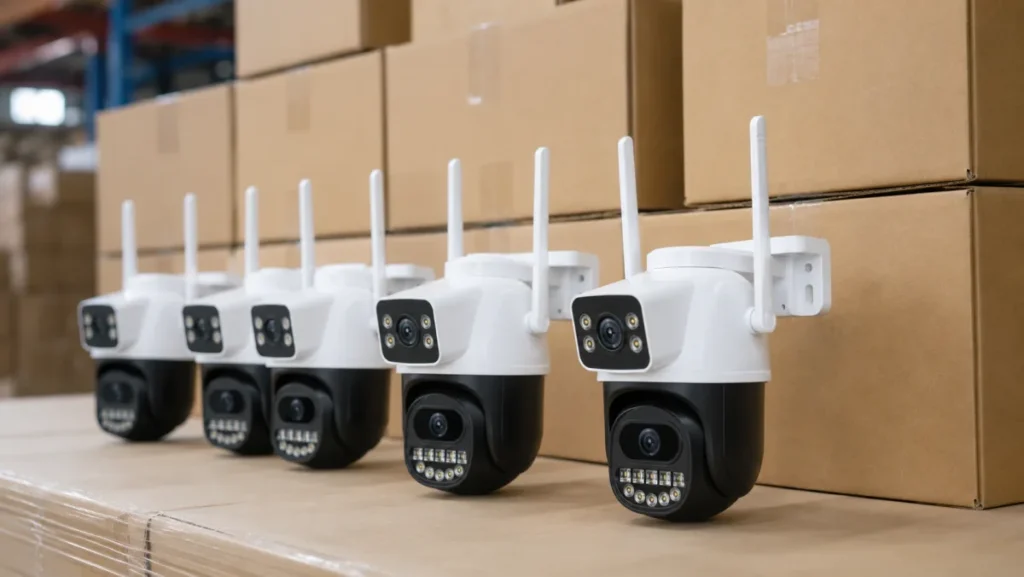
A public mold product is broadly available by design. Similar housings, boards, and companion apps can appear across many marketplace listings, so a promising SKU can quickly face direct competition from near-identical products. The conversation then shifts toward price, paid placement, and small feature differences. It also becomes harder for a seller to build a distinct product identity around the listing.
A recurring pattern in OEM projects is that a seller validates real demand with a solid public mold, then finds it difficult to defend the listing once similar products appear. The hardware was not necessarily the problem. The problem was that too little about the product belonged to the seller.
Breaking the cycle does not require inventing a camera from scratch. It requires owning something the competition can’t list tomorrow: a housing, a brand, an app experience, an AI feature set, or a subscription offer. That is the real difference between public mold and private mold thinking.
There is a clear economic pattern underneath all of this. The category itself is expanding — the global video surveillance market is projected to reach $204.68 billion by 2033, growing at an 11.7% CAGR from 2026 to 2033, with IP-based systems the largest segment (Grand View Research). A growing category also draws crowded, lookalike listings: third-party sellers accounted for 62% of units sold on Amazon in Q4 2024 (Marketplace Pulse), so a public-mold SKU often competes head-to-head with many near-identical products. On a commoditized listing, acquisition costs can rise as more sellers bid on the same keywords while the sale price comes under pressure. Differentiation helps keep those two forces apart. A branded, AI-equipped camera has a stronger chance to defend its position because the buyer is no longer comparing only a specification sheet and a price.
Public mold AI cameras: low-risk testing with real limits
A public mold camera uses a manufacturer’s existing tooling and reference design, shared across many buyers. For a seller validating a new market, that is a genuine advantage, not a weakness. Order volumes can start as low as 100 pieces for selected stock models, samples ship in days instead of weeks, and you spend almost nothing proving whether a category sells before committing real capital.
The right way to use a public mold is as a market probe. Launch it, watch the conversion rate, read the questions buyers ask, and learn which features drive the add-to-cart. Treat it as paid research rather than a long-term product.
The limits show up when the probe succeeds. A public mold usually does not give the seller exclusive rights to the housing. Packaging and app presentation may also remain generic unless they are customized separately, and another buyer may be able to source the same or a similar unit. A public mold can get you into a market. It is less effective at defending your position once the category gets crowded.
Private mold cameras: a more distinctive hardware identity
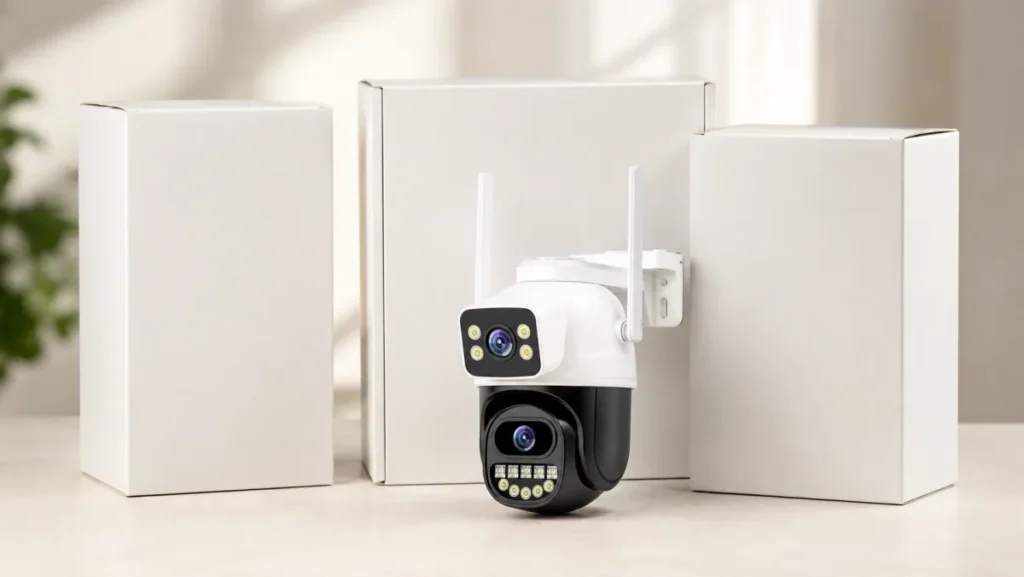
A private mold can give a product line its own visual identity. The factory develops tooling for a differentiated housing, and the packaging can carry your brand. Tooling ownership, exclusivity, and design-registration options should be confirmed in the development contract and reviewed for each target market. A branded companion app, cloud service, and firmware presentation are separate platform decisions rather than automatic outcomes of private tooling.
That differentiation changes how the product competes. Buyers comparing visually similar cameras tend to focus on price. Buyers comparing a recognizable branded device against an anonymous one can also weigh trust, reviews, and the app experience. A seller with a coherent branded line has a better chance to concentrate marketing and review-building efforts around its own listings.
The trade-off is commitment. Tooling carries an upfront cost, and the minimum order quantity depends on the housing, tooling scope, and production plan. That is why sequencing matters: most sellers should validate demand on a public mold first, then discuss whether a proven winner justifies a private mold. A staged private-label OEM path keeps the tooling decision downstream of market validation rather than ahead of it.
How AI cameras create differentiation beyond megapixels
Spec-sheet competition is a trap. Once two cameras both claim 2K and color night vision, the buyer has no reason to pay more for either, and you are back in the price war with a slightly nicer box. AI is what moves the comparison off the spec sheet.
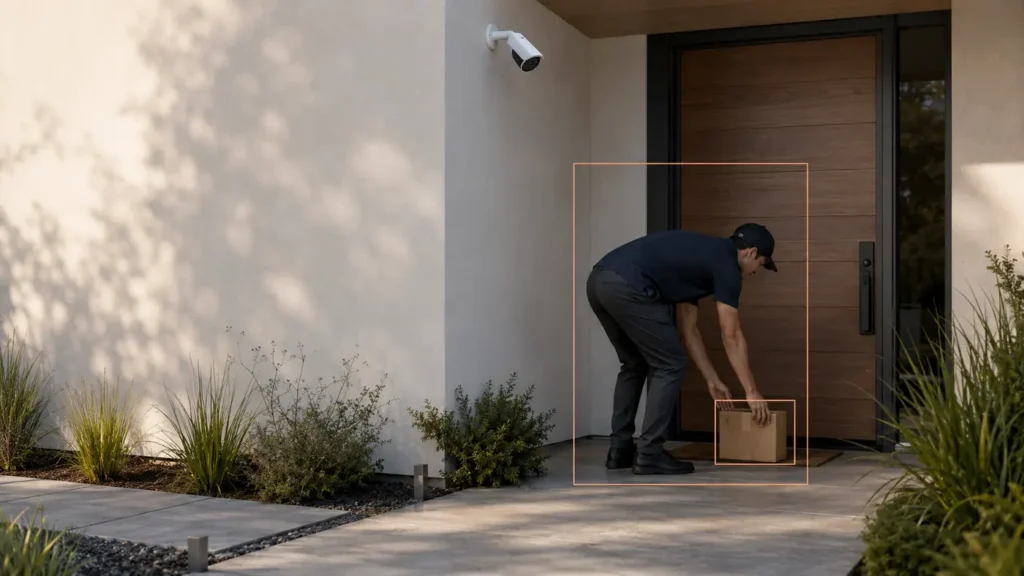
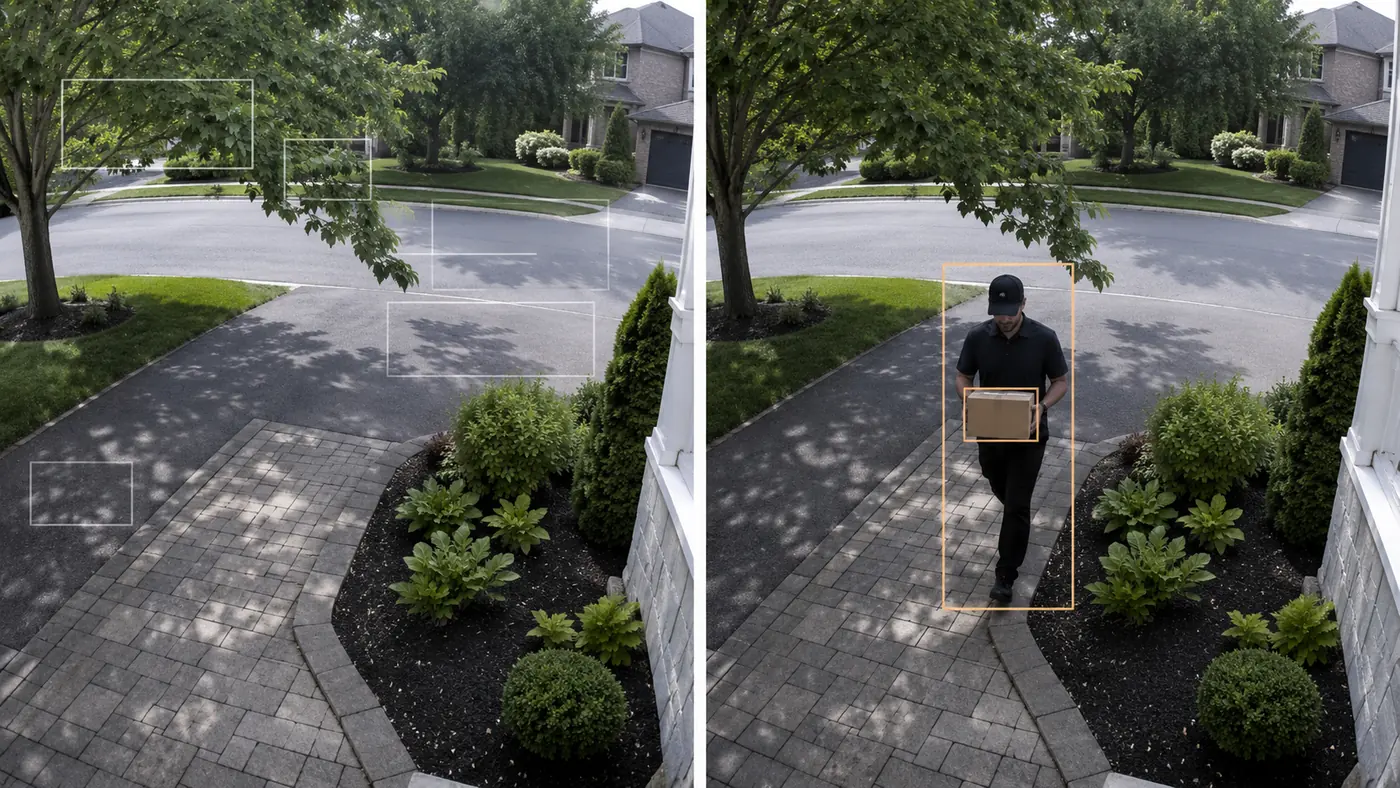
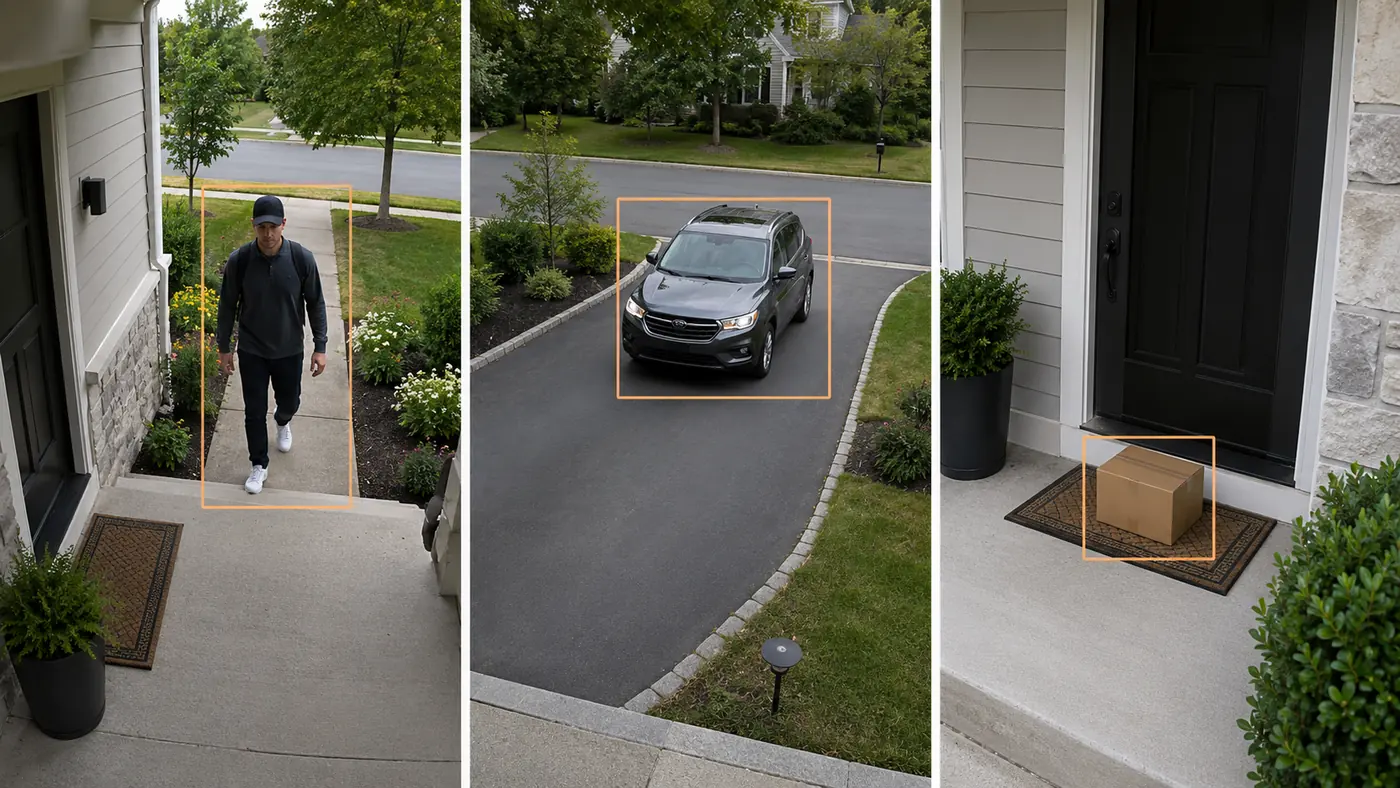
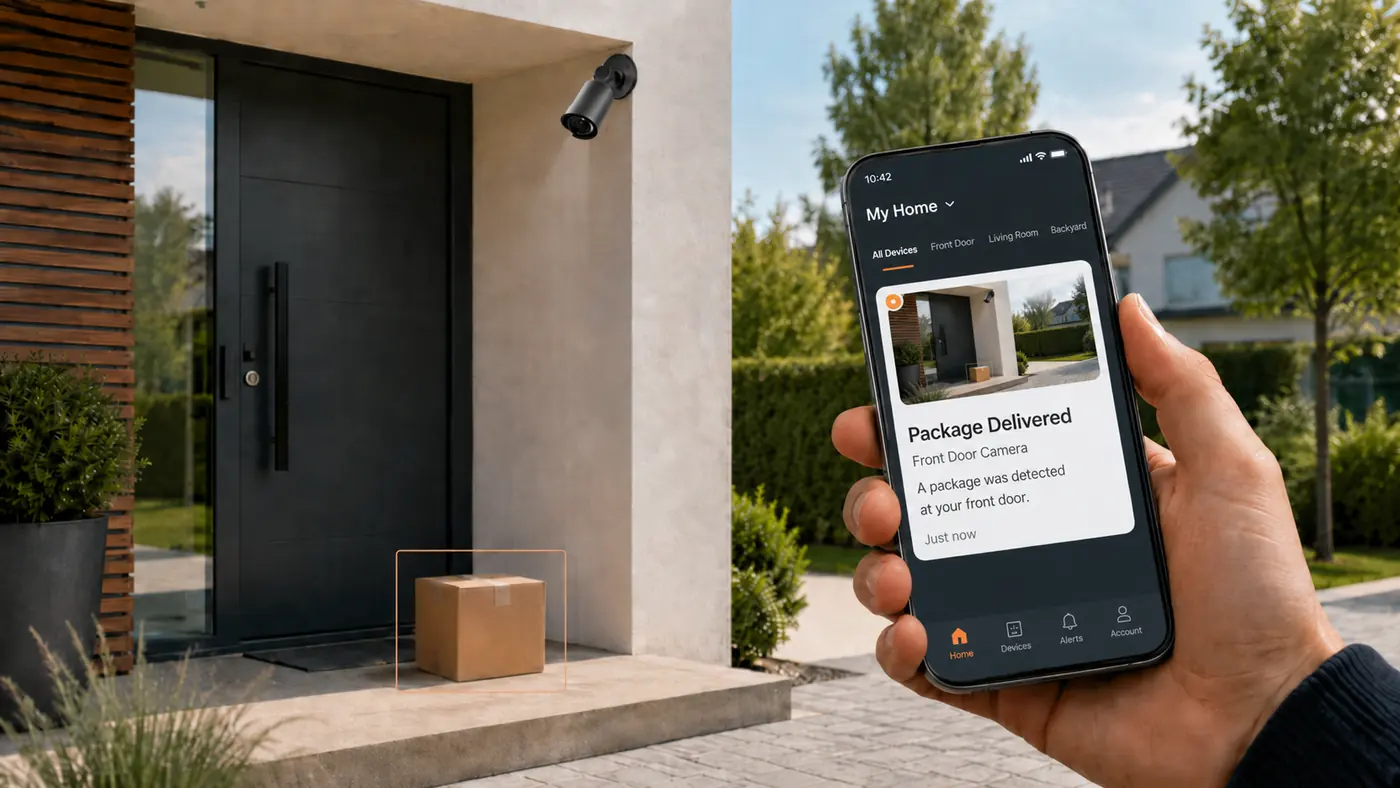
Depending on the model and configuration, useful AI features can include person detection, vehicle detection, package alerts, cry detection, and false-alarm filtering. The practical value is simple: alerts can become more relevant to the user instead of reacting to every movement in the frame. An outdoor model like the FLC-800PO 6MP AI camera is positioned around these experience features rather than resolution alone. That gives a listing a clearer story to tell and a reason to compete on experience rather than megapixels alone.
Think about three common sources of frustration with a budget camera: too many nuisance alerts, a setup process the buyer cannot finish, and night footage that turns to noise. Where the selected model supports it, person detection can help address the first. A branded app with a clear onboarding flow can help with the second. Better night-vision hardware and image tuning can help with the third. These are experience features the buyer notices early in ownership, not just specifications printed on a listing.
There is a second, quieter benefit. AI features can support value-added plans because smart detection, cloud event clips, and richer alerts give a brand services to package beyond the initial hardware sale. That same capability maps onto our current AI camera range. The point is not to win the megapixel argument — it is to make the megapixel argument less important.
Moving from stock units to OEM and a white-label platform
The cleanest way to build a camera business is in three deliberate stages, each lowering the risk of the next.
- Validate on stock. Sell a public mold model, confirm the market, and gather real buyer feedback.
- Differentiate the winner. Move the proven SKU into a more distinctive hardware and packaging configuration, with private tooling where justified.
- Own the platform. Adopt a white-label stack — app, cloud, and AI together — so the software experience is yours end to end, not just the box.
| Public mold | Private mold | White-label platform | |
|---|---|---|---|
| What you own | Shared design | Your housing & packaging | Your app, cloud & AI |
| Best for | Testing a market | Building a brand | Owning the customer |
| Typical MOQ | Selected stock from 100 pcs | Depends on tooling scope | Program-based |
| Differentiation | Low | Hardware identity | Full brand + software |
Stage three is where a seller starts operating more like a brand. When the app, cloud account, and supported AI services carry your identity, you are no longer selling only a box with a sticker on it; you are shaping the customer experience after the sale. That foundation makes use-case-driven product planning possible — building a range around needs such as home monitoring, solar-powered outdoor coverage, or retail instead of chasing whichever generic unit is cheapest this quarter.
How cloud subscriptions turn one-time sales into recurring revenue
Hardware is a one-time sale. The seller who only sells hardware restarts the revenue clock with every unit and lives entirely on thin per-device margin. Cameras are one of the few consumer electronics categories where that math can change, because the device keeps doing work after the sale — storing clips, running AI services, and powering tiered plans that customers renew.
Two things are fair to plan around today. First, cameras can support ongoing revenue through cloud storage, AI services, and subscription packages layered on top of the hardware. Second, a white-label platform can let a brand discuss how those plans are presented to customers rather than defaulting to a generic third-party experience. The recurring layer can make the device the start of a customer relationship instead of the end of a transaction.
The strategic question is who owns the customer relationship after the sale. With a generic camera, the platform behind the device may control the subscription experience. With a white-label arrangement, the brand can discuss how plans, billing, and customer touchpoints should work. Revenue ownership and settlement depend on the platform arrangement and commercial terms, so they must be confirmed during program scoping.
The mechanics are worth understanding even without fixed numbers. Recurring revenue from cameras usually comes down to an attach rate — the share of buyers who activate a paid cloud or AI plan — multiplied by what each plan earns over its lifetime. Because the hardware is already sold, much of that recurring layer is incremental: it is not paying a second acquisition cost to earn it. A brand that owns the platform can influence both halves of that equation — which plans exist, how they are presented during setup, and when a free tier invites an upgrade. A brand renting a generic third-party experience controls neither lever and typically captures little of the recurring upside. That structural difference, not any single percentage, is the real reason platform ownership matters to long-term margin. For most catalogs the question is not whether a recurring layer is technically possible — it usually is — but whether the brand is positioned to own it from the first sale, or has already handed that ground to a third-party platform.
A deliberate note on numbers: the specific economics — split structures, billing cycles, and revenue figures — depend on the plan a brand designs and on commercial terms, so this article does not quote fixed percentages or growth claims. When you scope a program with us, those numbers get worked out against your actual catalog and market.
What the winning sellers do differently
Sellers can make two opposite sequencing mistakes. Some over-commit on day one, cutting an expensive private mold for a market they have not validated. Others never leave the public mold stage and remain exposed to direct price competition even after they know a category can sell.
A disciplined seller treats every stage as earning the right to the next. The seller proves demand on stock, brands the SKU that actually sold, and adds the platform layer once there is a customer base worth serving. None of that depends on having the cheapest unit or the highest megapixel count. It depends on owning a little more of the product at each step — first the listing, then the look, then the software experience and the post-sale relationship.
A private mold AI camera checklist for e-commerce sellers
Before committing to a supplier or a mold, work through five questions. They decide far more about your margin than the spec sheet does.
- Probe or brand? Are you validating a new market (public mold) or scaling a proven winner (private mold)?
- Which AI features actually matter to your buyers — person detection, package alerts, false-alarm filtering — versus features that only pad the listing?
- Does your target market’s certification fit? Requirements vary by market and product configuration. FAELAN supports the certification requirements for markets such as Mexico (IFT), Brazil (Anatel), and Argentina (ENACOM), with FCC, CE, and RoHS documentation available. Confirm the required certification scope for each selected model before you list or ship.
- Do you want recurring revenue, and can the platform support subscription plans under your own brand?
- Can one supplier take you end to end — stock, private mold, app, cloud, and AI — so you are not stitching together four vendors as you scale?
The checklist helps sort factories by how far they can take a product line, not only by who quotes the lowest unit price today. The wider concept of private label is well documented across consumer categories beyond cameras.
Build your differentiated camera line with FAELAN
If you are selling generic cameras and watching the margin erode, the answer may not be a cheaper unit. It may be a product line with more of your own identity. FAELAN can discuss the path from selected stock models for market testing to OEM branding and a white-label AI and cloud platform. Selected in-stock models start from 100 pcs, ship with a 1-year hardware warranty, and include lifetime firmware update support.
Tell us your target market and where you are today — testing, scaling, or building a brand — and we will map the right next step. Talk to our product team for a selection plan built around your catalog.
Frequently asked questions
What is the difference between a public mold and a private mold camera?
A public mold uses a shared factory design sold to many buyers, so a competitor can list a near-identical unit. A private mold uses tooling developed for one brand, giving the seller a distinct housing and packaging to build a product line around.
What is the minimum order quantity?
Selected in-stock models are available from 100 pcs. Private-mold tooling MOQ depends on the housing and production scope and is confirmed during program scoping. (The 2,000 pcs figure that applies to OEM branding is separate from private-mold tooling.)
Can I sell the cameras under my own brand, app, and subscription plans?
Yes. A white-label AI and cloud platform lets a brand present its own app, cloud account, and subscription plans rather than a generic third-party experience. Plan structures and commercial terms are confirmed when scoping a program.
Which market certifications do you support?
FAELAN supports the certification requirements for markets such as Mexico (IFT), Brazil (Anatel), and Argentina (ENACOM), with FCC, CE, and RoHS documentation available. Confirm the exact scope for each model and market.