Every camera on the market now has "AI" printed somewhere on the box. Most of them mean a motion sensor with better marketing. For distributors, marketplace sellers and brands building a 2026 lineup, the gap between cameras that say AI and cameras that do AI is where the margin lives — because that gap decides false-alert rates, app reviews, return rates and whether a subscription tier is sellable at all.
This guide is the B2B version of the question: which AI security cameras are actually worth putting in a catalog in 2026? We cover what real AI detection means at the hardware level, six picks organized by use case, and the evaluation checklist we would use against any supplier — including ourselves.
What makes a security camera actually "AI"
The cleanest way to cut through the marketing is to ask where the intelligence runs. In 2026 there are three honest tiers.
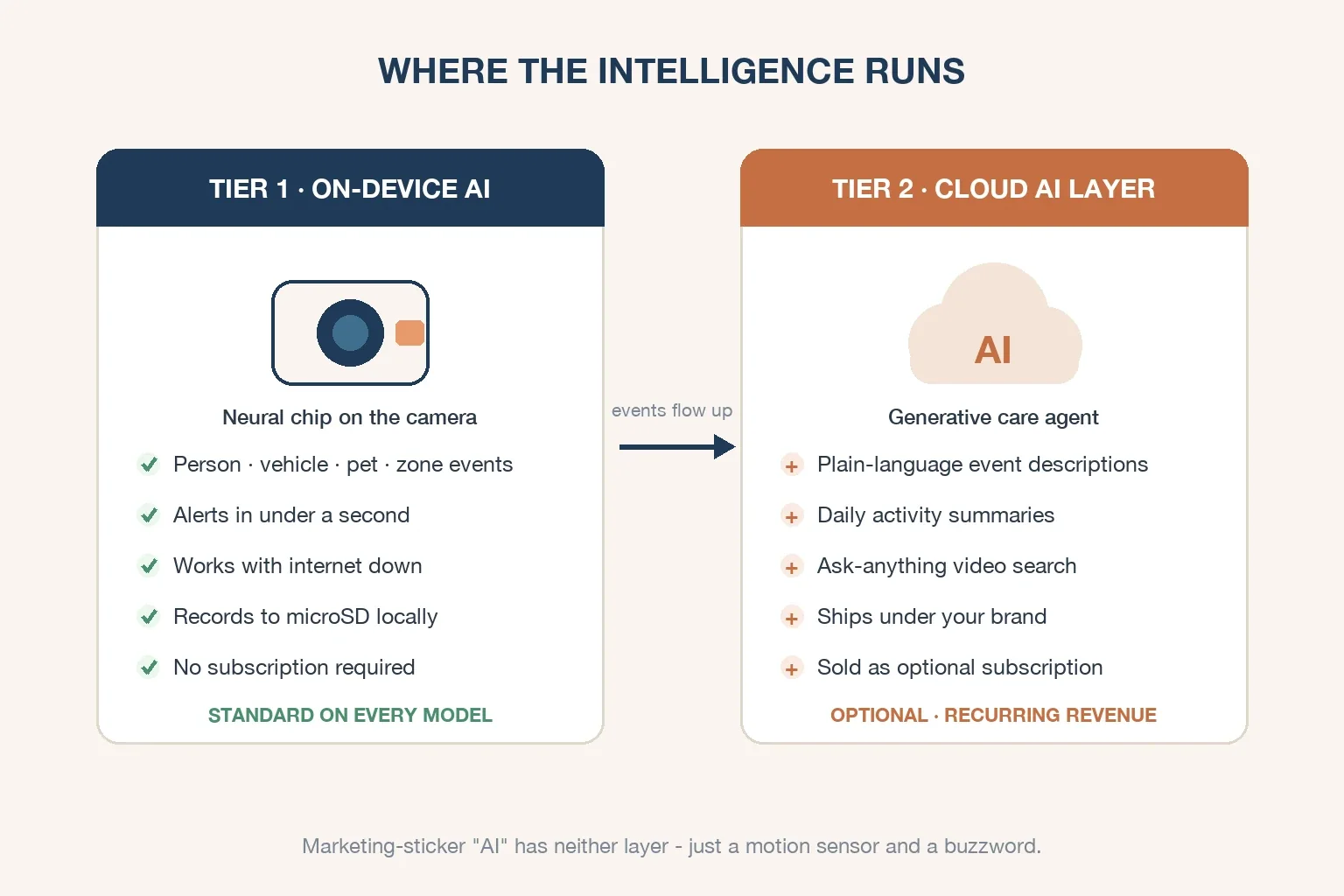
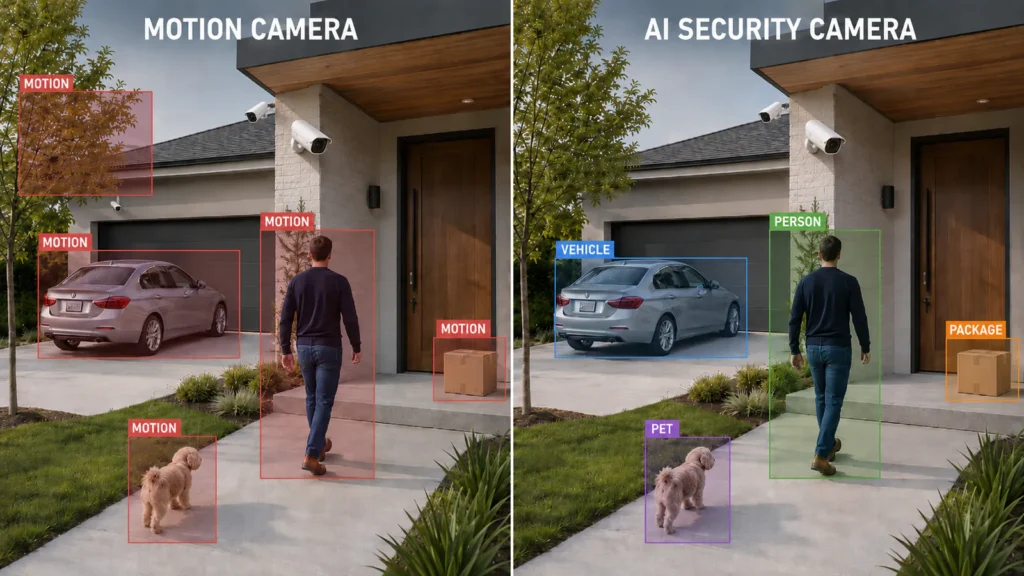
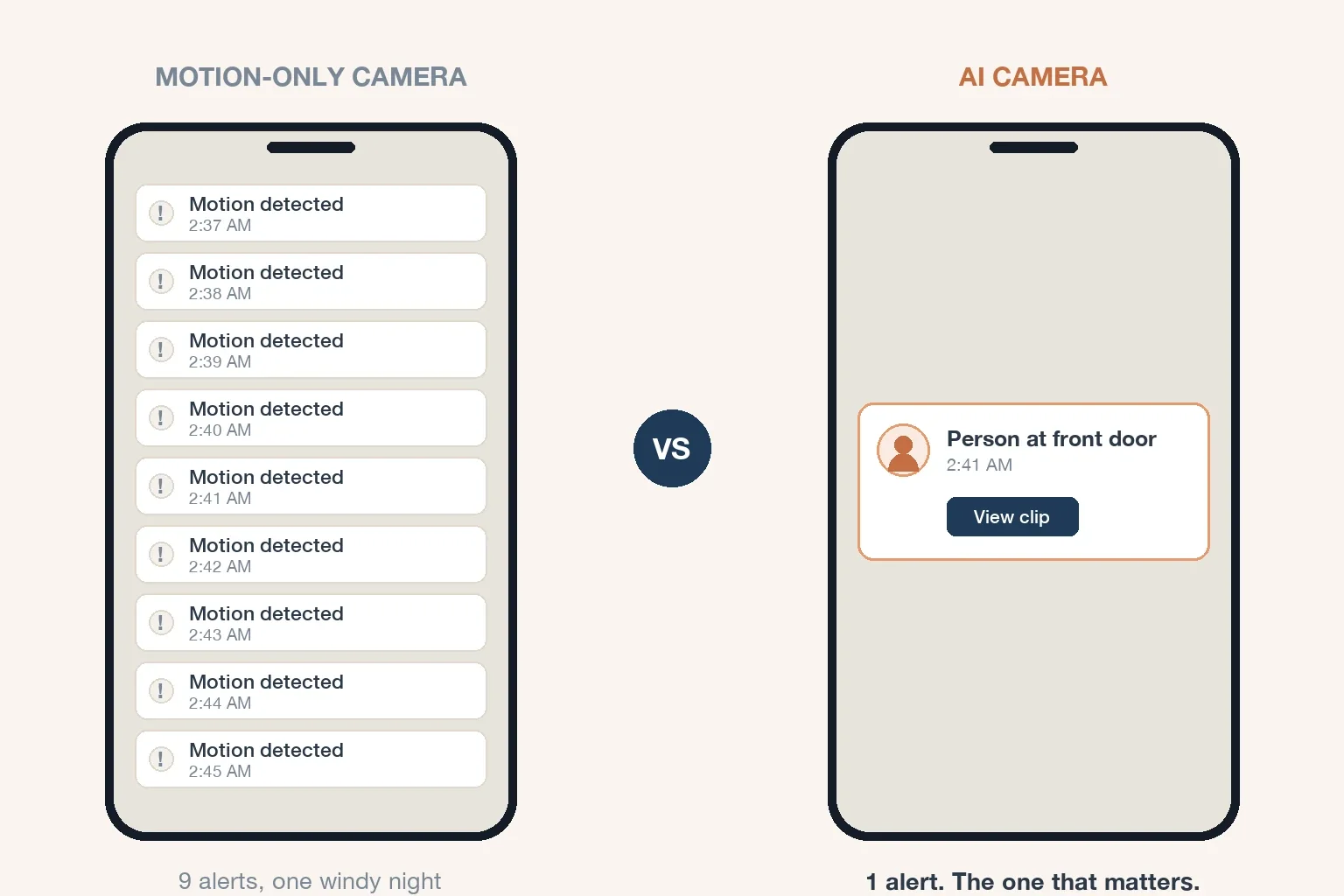
Tier 1 — On-device AI detection. A neural processor on the camera itself classifies events as they happen: person, vehicle, pet, package, zone intrusion. No subscription required, works when the internet is down, and the alert fires in under a second because nothing leaves the device. This is the layer that kills false alerts — a swaying branch stops being "motion," because the camera knows it is not a person. The practical difference this makes for buyers and sellers is the subject of our earlier deep-dive, AI Security Camera vs Traditional Security Camera.
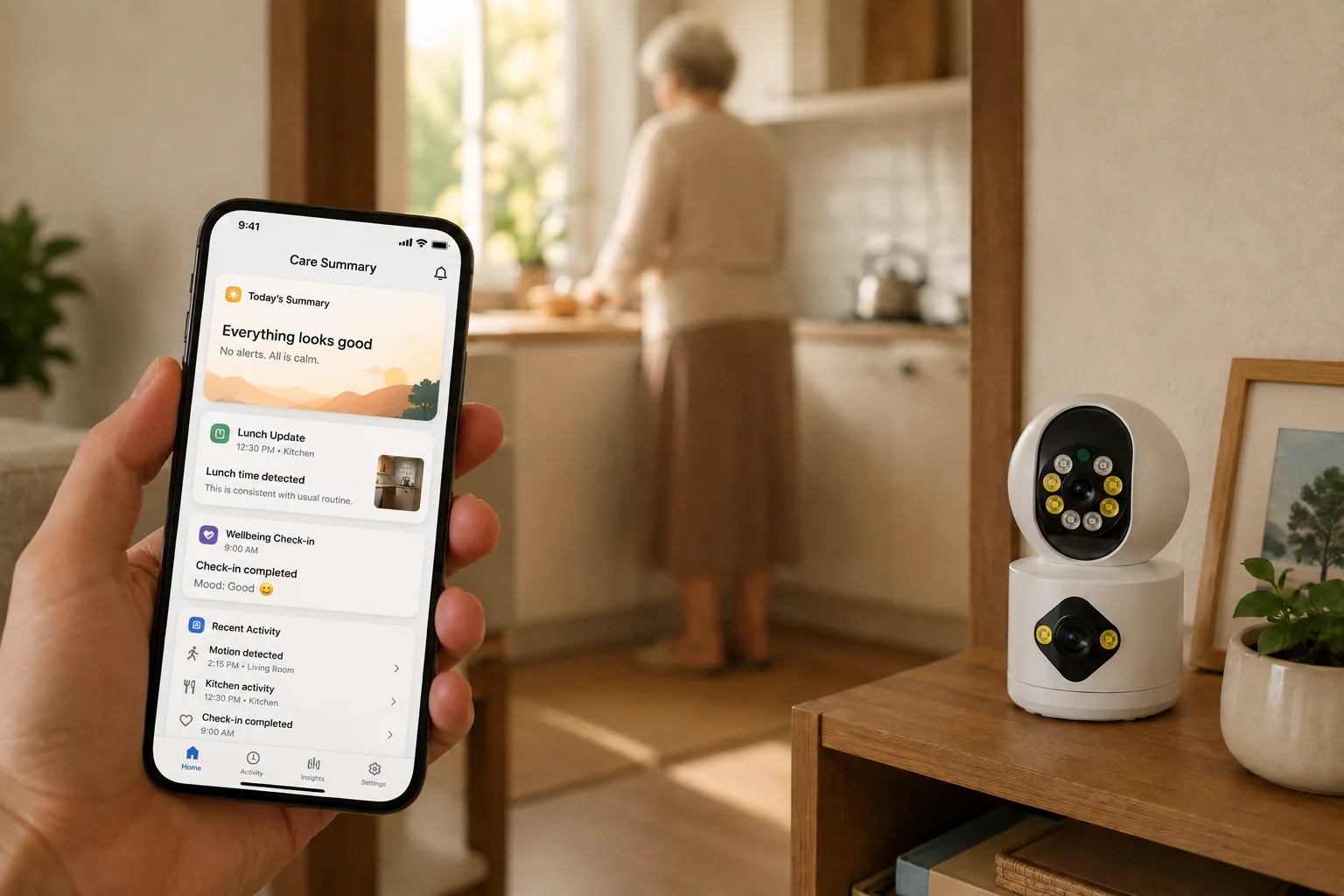
Tier 2 — Cloud AI layer. Heavier intelligence that runs server-side, on top of the on-device events: natural-language descriptions of what happened, daily activity summaries, search across footage by asking a question. This is where generative AI enters the category — FAELAN's version is a cloud care agent that turns "motion detected 47 times" into "your father had lunch at noon and napped after" — and because it runs in the cloud, it is correctly sold as an optional subscription, not baked into the hardware price.
Tier 3 — The marketing sticker. A PIR motion sensor, a buzzword, and a box that says AI. You find these by testing, which is what the checklist later in this guide is for.
The architecture worth buying — and worth selling — is Tier 1 standard on every unit, with Tier 2 as the upgrade path. Hardware margin once, subscription margin monthly.
Why this matters more in 2026 than it did two years ago
Three shifts changed the category:
- Alert fatigue became a returns problem. Buyers no longer tolerate notification spam; they mute the app within two weeks, then return the camera with "doesn't work" as the reason. AI event filtering is now the difference between a 4.5-star listing and a refund queue.
- The subscription model matured. End users got used to paying monthly for camera intelligence — but only when the free tier already works. Cameras with no on-device AI try to paywall basic alerts, and reviews punish them for it.
- Generative AI gave the category a second story. Descriptions, summaries and ask-anything search are features a brand can demo in a 15-second video — which is exactly what marketplace listings and distributor pitches need.
The six best AI security cameras of 2026, by use case
There is no single best AI camera, the same way there is no single best buyer. These six picks map to the use cases B2B buyers actually stock for. Where a market-reference brand defines a segment, we name it — and we are equally direct about where our own models sit.
1. Best indoor AI camera for everyday family use
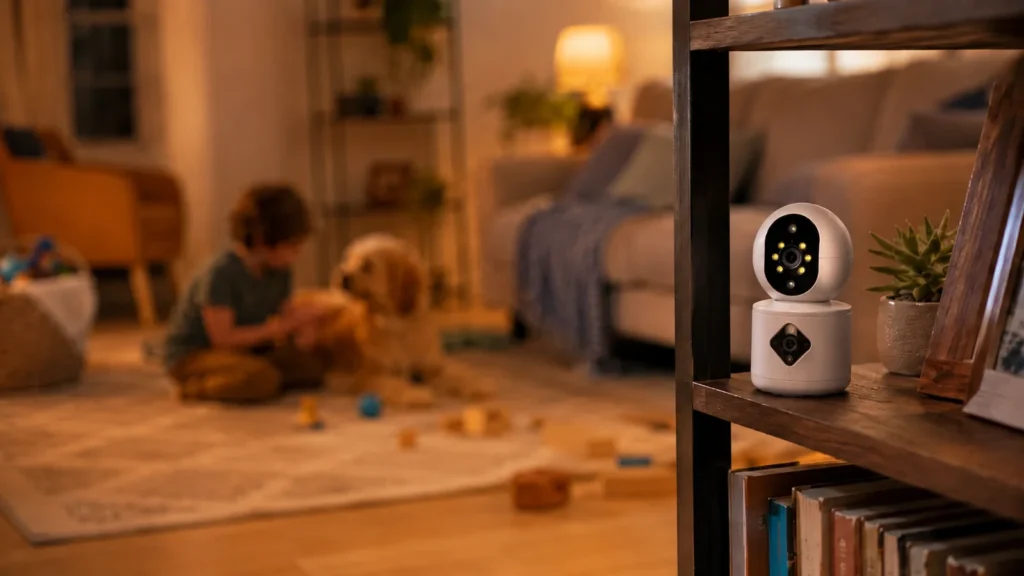
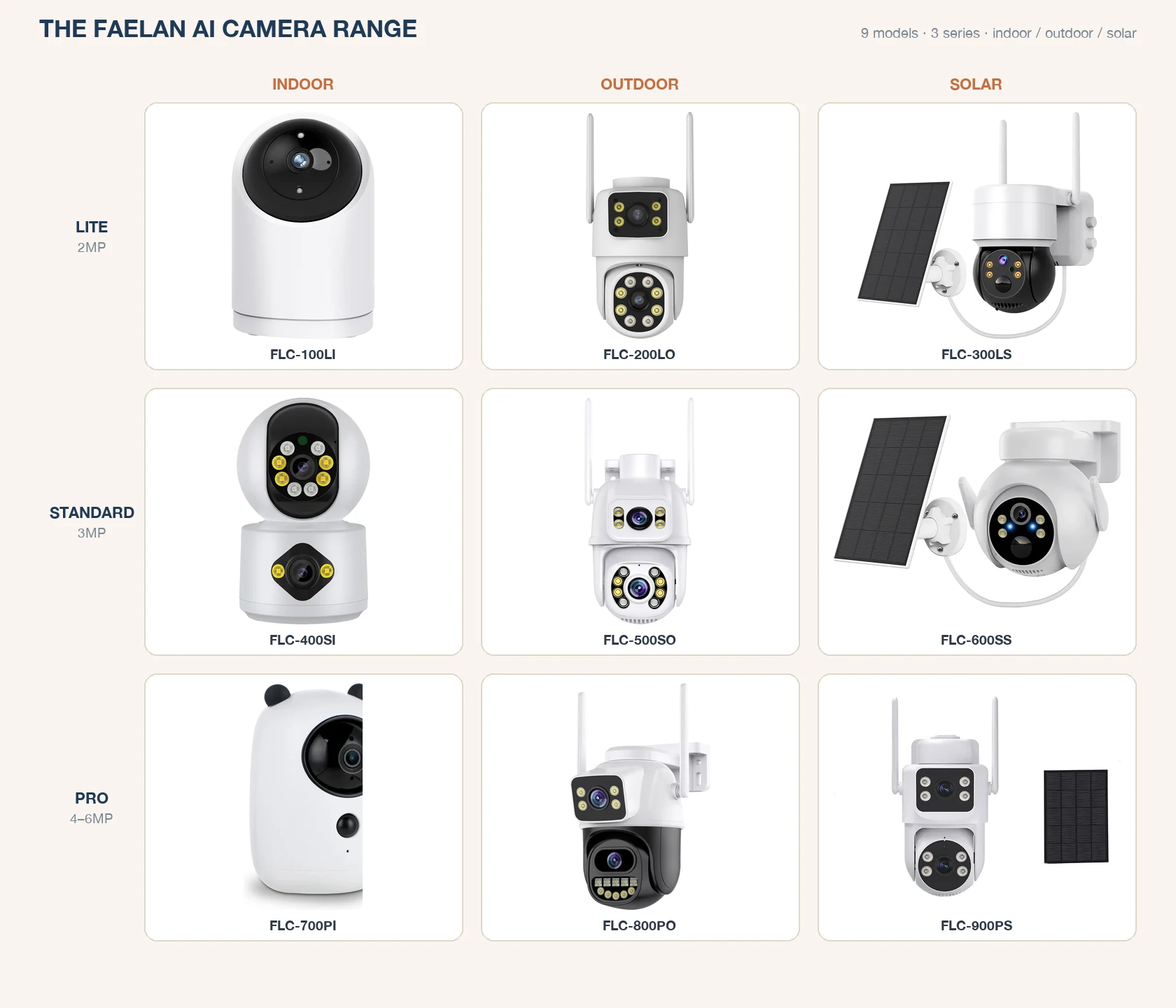
The volume seller in any lineup. Look for 3MP resolution (2MP is fading from listings), person and pet detection on-device, two-way audio, and privacy controls a non-technical user can find. This is where the FLC-400SI sits in FAELAN's range — the Standard-series indoor model built to be the high-volume SKU a distributor reorders monthly. Wyze and Tapo own the budget end of this shelf in North America; the B2B play is matching their spec at wholesale economics with your brand on the box.
2. Best indoor AI camera for baby and elder care
The use case that justifies the cloud AI tier. On-device detection handles the safety events; the cloud care agent adds what families actually pay for — daily summaries, natural-language event descriptions, and the ability to ask "did grandma eat lunch?" instead of scrubbing eight hours of footage. FAELAN's flagship indoor model, the FLC-700PI (4MP, Pro series), pairs with that optional care-agent subscription — and this combination is the single strongest differentiator in our lineup, because the big consumer brands sell motion clips, not care narratives.
3. Best outdoor AI camera for entrances and perimeters
Outdoor is where false alerts go to multiply: headlights, rain, cats, shadows. On-device person/vehicle classification is non-negotiable here. Spec floor for 2026: 3MP+, IP66 weatherproofing, night vision tested against a dark yard rather than a showroom, and WiFi with an RJ45 wired-backup port for installs at the edge of router range. The FLC-500SO is FAELAN's Standard outdoor answer; Ring and Eufy define consumer expectations in this segment, which conveniently trains end users on why AI filtering is worth having.
4. Best dual-lens AI camera for wide coverage
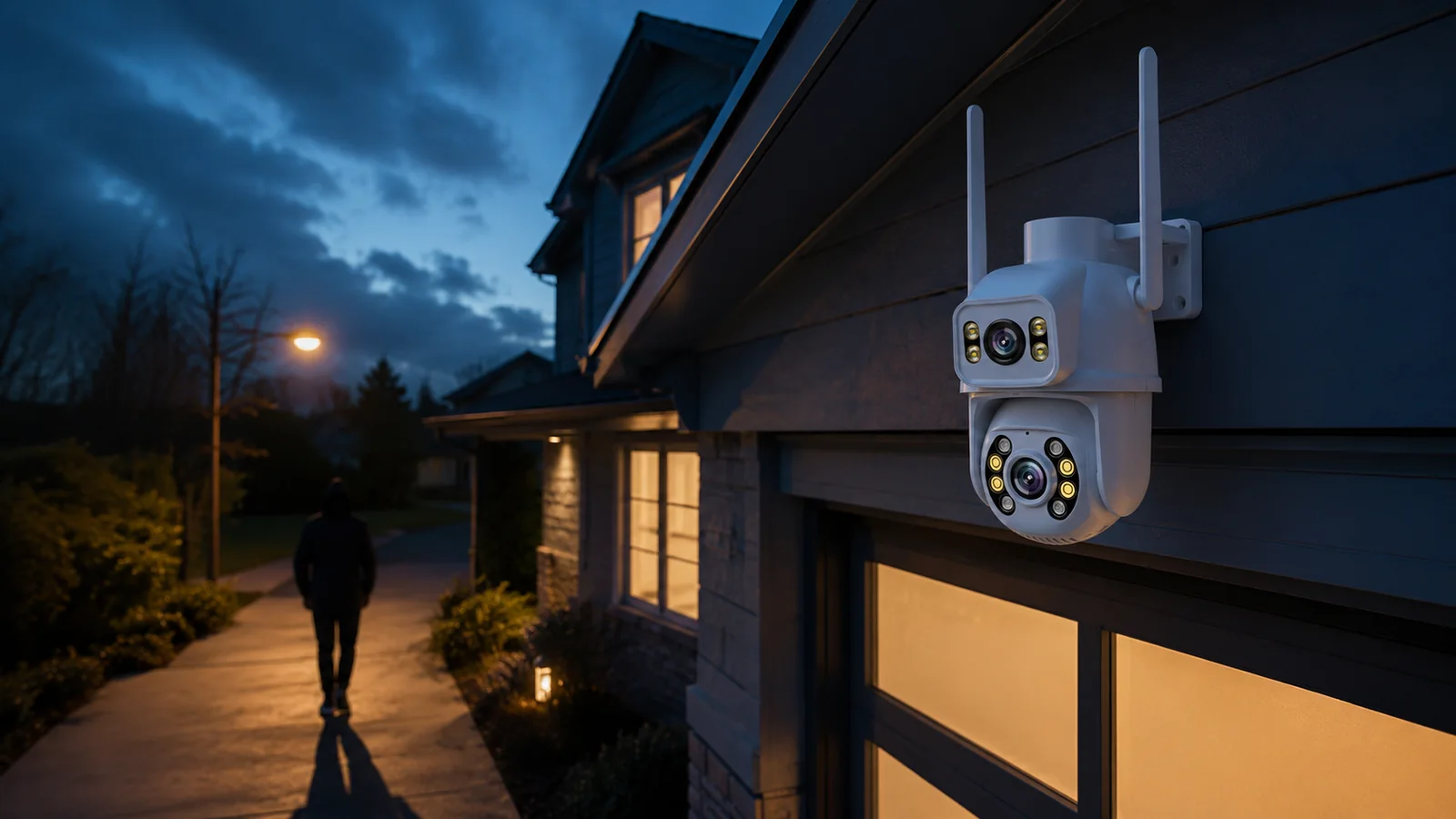
One camera, two sensors: a fixed wide view plus a PTZ lens that tracks what the AI flags. For sites that would otherwise need two installs, the dual-lens format halves hardware and wiring cost — a clean upsell story for distributors. FAELAN's FLC-800PO (6MP, dual-lens outdoor) is our Pro-series entry here, with on-device detection driving the tracking.
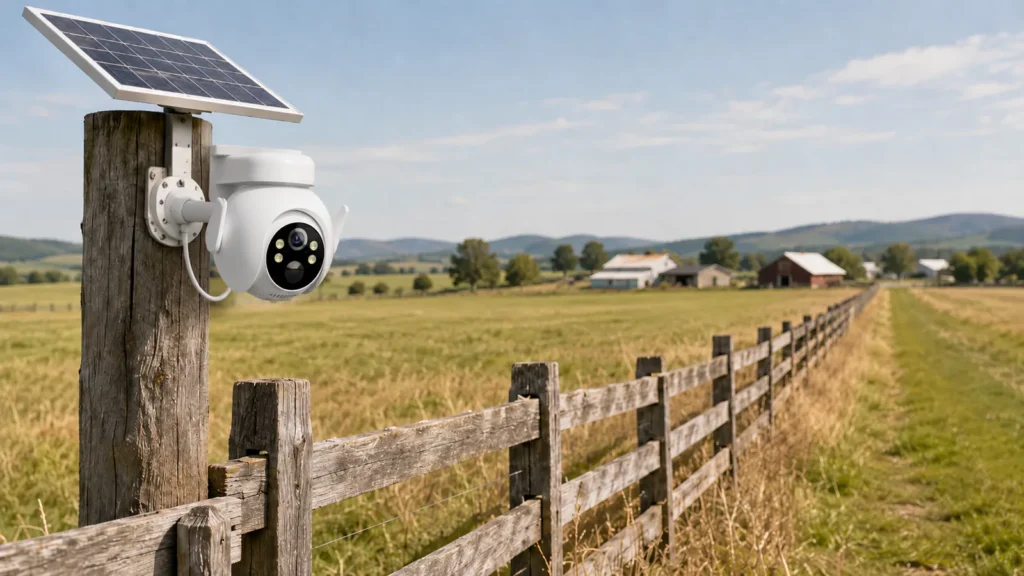
5. Best solar AI camera for sites with no power
Off-grid AI is its own discipline — the AI has to earn its power budget, because every false wake-up drains the battery. Event-triggered recording with on-device classification is what makes a solar camera last through winter. The FLC-900PS (6MP solar PTZ) anchors FAELAN's three-SKU solar line; the full selection logic for this category — panel sizing, battery math, connectivity choices — is covered in Best Solar Security Cameras 2026.
6. Best AI camera lineup for OEM and private-label programs
For brands, the question is not "which camera" but "which platform." A private-label AI lineup needs all of the above — indoor, outdoor, solar — plus an app, cloud and subscription stack that carries your name instead of the factory's. That stack is what FAELAN's white-label AI platform provides: on-device AI detection on every model, the optional cloud generative-AI care agent as your subscription product, and branding from hardware to app store listing. The commercial mechanics — MOQ, packaging, certification — live on the OEM / ODM solutions page.
How to evaluate any "AI" camera claim: a 7-point B2B checklist
- Demand the architecture answer. "Where does detection run — on the device or in the cloud?" A supplier who cannot answer in one sentence is selling Tier 3.
- Test the false-alert rate yourself. Sample in hand, walk past it fifty times; let a cat, a car and a swaying branch do the same. Count. This number predicts your review score.
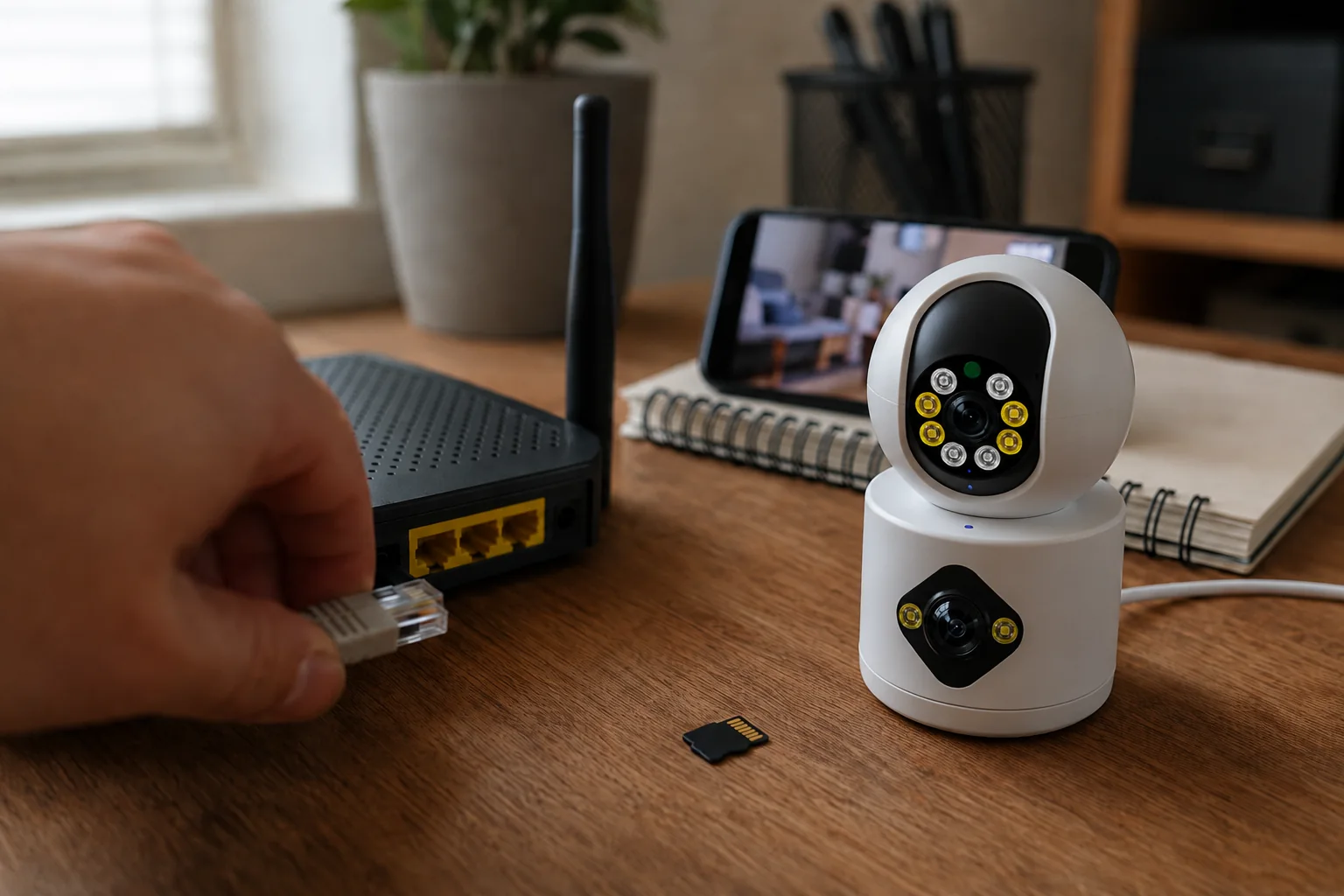
- Pull the internet. Unplug the router. A real on-device AI camera keeps detecting and keeps recording to microSD. A cloud-dependent one goes blind.
- Check what the free tier includes. If basic person alerts sit behind a paywall, end users will rate the product one star, with your brand on it.
- Ask what the subscription actually adds. The honest answer in 2026: cloud-side generative features — descriptions, summaries, search. If the paid tier just unlocks what competitors give free, the pricing story collapses.
- Confirm app language and localization. AI event descriptions in English do not sell in Mexico or Brazil. Ask which languages the AI layer ships in.
- Treat AI claims like certification claims — per SKU. A supplier whose flagship has real AI may still ship entry models with bare PIR. Confirm the detection capability of each model you are listing, the same per-SKU discipline we apply to certifications in the wholesale buyer's guide.
The privacy questions your buyers will ask you
AI cameras watch homes, which means every distributor and brand selling them inherits privacy questions from end users. Four you should be able to answer before stocking any model:
Where does the footage go? With on-device AI, detection happens locally and clips can stay on the microSD card — the architecture itself is the privacy answer. Cloud features should be opt-in, and your supplier should be able to tell you which data center region serves your market.
Can the AI features be turned off? Privacy modes, lens covers on indoor models, and per-camera detection toggles are no longer premium features; reviewers check for them. A camera that cannot stop watching is a one-star review waiting in a bedroom.
What happens to data under local law? Brazil's LGPD and the EU's GDPR both treat home video as personal data, and Latin American buyers increasingly ask. You do not need a law degree — you need a supplier who can state, in writing, where data is processed and how deletion requests work.
Who can access the account? Family sharing with role controls beats password-sharing, and your support team will feel the difference in ticket volume.
None of these are reasons to avoid the category. They are reasons to pick a supplier who has already done this homework — and to put the answers in your listing before buyers ask.
What AI features actually move marketplace conversion
For sellers, AI is only worth what it does to the listing. From watching what converts on Mercado Libre and Amazon in this category, three patterns hold:
- Show the filtered alert, not the feature list. A 15-second clip of "one notification: person at door" next to a competitor's notification flood outsells a spec table. AI event filtering is the rare technical feature that demos visually.
- Name the events, not the algorithm. "Knows the difference between your dog and a stranger" converts; "advanced neural network detection" does not. Buyers purchase outcomes.
- Let the free tier carry the purchase, let the subscription carry the relationship. Listings that lead with "no subscription required for smart alerts" remove the biggest objection in the category — then the cloud care features upsell inside the app, where the demo is the product itself.
This is also the practical reason to insist on on-device AI across your lineup: it is the version of AI you can promise in a headline without an asterisk.
Real AI vs marketing AI: the quick comparison
| Marketing "AI" (Tier 3) | On-device AI (Tier 1) | + Cloud AI layer (Tier 2) | |
|---|---|---|---|
| Person/vehicle/pet detection | ✗ (motion only) | ✓ on the camera | ✓ |
| Works without internet | Partially | ✓ detection + microSD recording | Detection yes; cloud features pause |
| Needs a subscription for alerts | Often | ✗ | ✗ (subscription adds extras, not basics) |
| Event descriptions in plain language | ✗ | ✗ | ✓ |
| Daily summaries / ask-anything search | ✗ | ✗ | ✓ |
| False-alert behavior | Notification spam | Filtered events | Filtered + explained |
| Margin model for sellers | One-time, race to bottom | One-time, defensible spec | Recurring subscription revenue |
Frequently asked questions
What is the best AI security camera in 2026?
It depends on the placement and the buyer. For everyday indoor use, a 3MP camera with on-device person and pet detection is the right baseline; for baby or elder care, choose a model whose cloud layer adds daily summaries and natural-language descriptions; for outdoor and solar sites, prioritize on-device classification and local microSD recording. The six picks above map each use case to a specific camera class.
Do AI security cameras need a subscription?
Real on-device AI detection should not require one — person, vehicle and pet alerts belong in the free tier. Subscriptions are justified for cloud-side generative features such as event descriptions, daily summaries and footage search. Treat any camera that paywalls basic AI alerts as a red flag.
Do AI security cameras work without internet?
Cameras with on-device AI keep detecting events and recording to local microSD storage during an outage; cloud features resume when the connection returns. Cameras that run detection in the cloud stop working entirely — which is why the "pull the router cable" test belongs in every sample evaluation.
What is the difference between AI detection and a motion sensor?
A motion sensor reacts to any pixel change or heat movement — branches, headlights, rain. On-device AI classifies what moved before alerting, so the user gets "person at the front door" instead of forty notifications a night. Lower alert volume, higher alert value, fewer returns.
Can AI security cameras be white-labeled for my brand?
Yes. An OEM/white-label program can put your brand on the hardware, packaging, app and cloud subscription. Confirm that both the on-device AI and the cloud AI layer ship under your brand, including app-store listing and event-description language support for your markets.
What resolution do AI security cameras need?
Detection accuracy depends more on the AI model than raw megapixels, but 2026 listing expectations are 3MP as the volume standard and 4-6MP for flagship and dual-lens models. Below 2MP, both detection detail and marketplace conversion suffer.
Build your AI camera lineup
If you are choosing AI security cameras for a catalog, a marketplace store or your own brand — tell us your market and use cases. The FAELAN team will map the right mix across our nine-model AI camera range, with on-device detection standard, the cloud care agent as your subscription tier, and certification scoped per SKU and per market.